
The Wayzata Section Foreman’s House: A Railroad Relic Reimagined
The Section Foreman’s House — is one of the city’s most tangible links to its railroad past

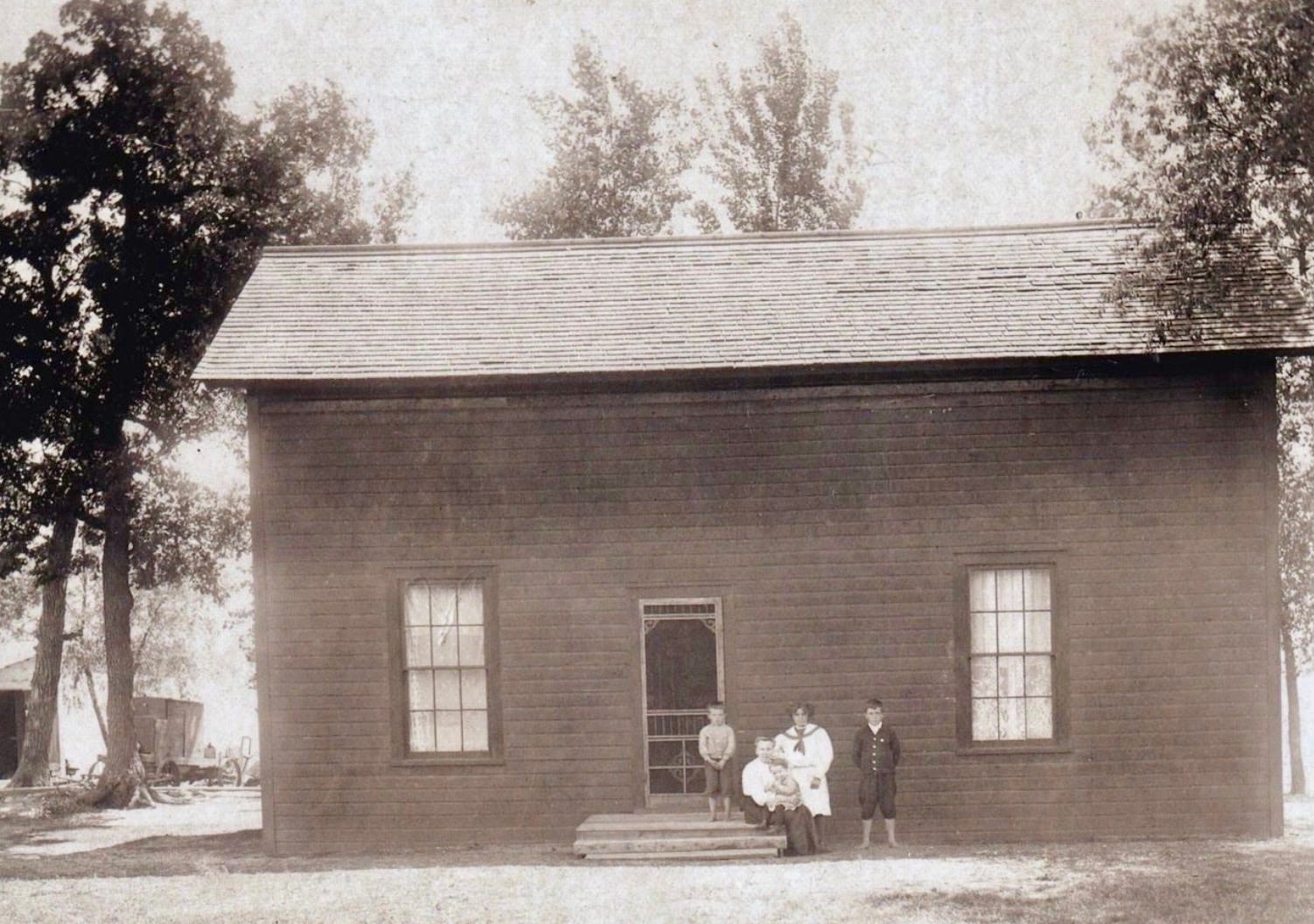
Perched between the Burlington Northern Santa Fe rail line and the waters of Lake Minnetonka stands a modest house at 738 East Lake Street. To the casual passerby, it might seem like little more than an aging cottage, dwarfed by the luxury condominiums and restaurants that now define downtown Wayzata. Yet this small structure — the Section Foreman’s House — is one of the city’s most tangible links to its railroad past, and a rare survivor of the era when the Great Northern Railway tied Minnesota’s towns and economies together.
Built in 1902 for about $775, the house was one of many identical “section houses” constructed along the Great Northern line. Each was home to a section foreman — a man responsible for inspecting and maintaining roughly twenty miles of track. His job was demanding and constant: in all seasons, he and his crew checked rails for damage, cleared snow, and repaired washouts. Because track work required a quick response to any trouble, the railroad built these houses right beside the line.
Wayzata’s assignment, however, was an enviable one. Unlike most section houses perched on remote prairie stretches, this one stood at the edge of Lake Minnetonka, where the foreman could watch for trains against a backdrop of sailboats and summer cottages. The juxtaposition of lake and rail made it uniquely Minnesotan — a place where industrial progress met leisure and landscape.
For more than sixty years, the house remained railroad property, passed from one foreman’s family to another. When the Great Northern and Northern Pacific merged into Burlington Northern in the 1970s, the house was sold, beginning a long period of neglect and uncertainty. Wayzata was changing quickly: its working waterfront gave way to marinas, boutiques, and upscale dining. The humble foreman’s house, sitting between progress and the past, seemed destined for demolition.
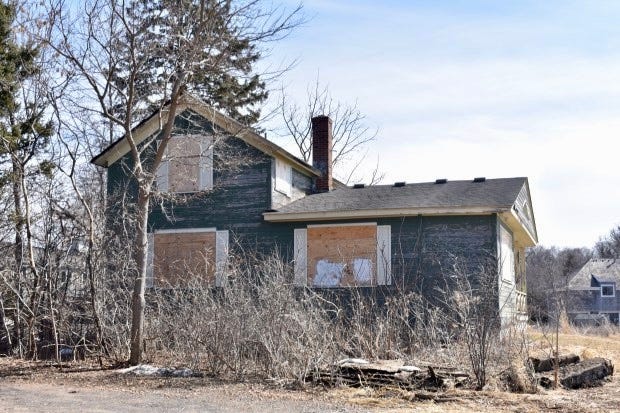
But its survival speaks to Wayzata’s evolving sense of history. By the 2000s, the small structure had become one of the few unaltered remnants of the town’s railroad roots. Community advocates and the Wayzata Historical Society pressed for preservation. The City of Wayzata eventually purchased the property and designated it as a Heritage Preservation Site in 2020. A year later, it was added to the National Register of Historic Places.
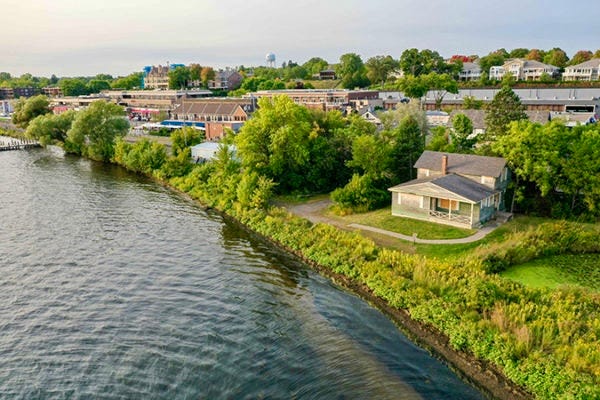
Today, the Section Foreman’s House sits at the center of Wayzata’s “Panoway on Wayzata Bay” project — a multi-phase effort to reconnect the city to its lakefront. The plan envisions the restored house as a lakefront learning center, serving both as an interpretive museum and a small classroom focused on the intersection of rail, lake ecology, and local history. The architectural firm Cushing Terrell completed detailed rehabilitation plans in 2023, and the city continues to seek funding through state bonding and private donations.
The project is as symbolic as it is practical. Restoring the house is not simply about saving old lumber and shingles; it is about reclaiming a story of labor, connection, and transformation. The Section Foreman’s House reminds visitors that the prosperity of modern Wayzata rests on the sweat of trackmen who kept trains — and commerce — moving safely across Minnesota.
Though only four rooms in size, the house holds an outsize place in Wayzata’s narrative. Its preservation demonstrates a community’s willingness to see value in the ordinary: a worker’s dwelling, not a tycoon’s mansion; a maintenance house, not a depot. In an age when many historic structures are lost to development, the decision to restore this one — and to make it public — reflects a mature understanding of heritage as something that belongs to everyone.
As the rails still hum behind it and the waters of the lake lap at its edge, the Section Foreman’s House stands as a bridge between eras. Built for duty, saved by memory, and reborn for education, it tells the quiet but essential story of how a small town and a great railroad shaped one another — and how history, when cared for, can still find new purpose on the shore.


