
The Hattie May
The Hattie May was a sternwheel steamer

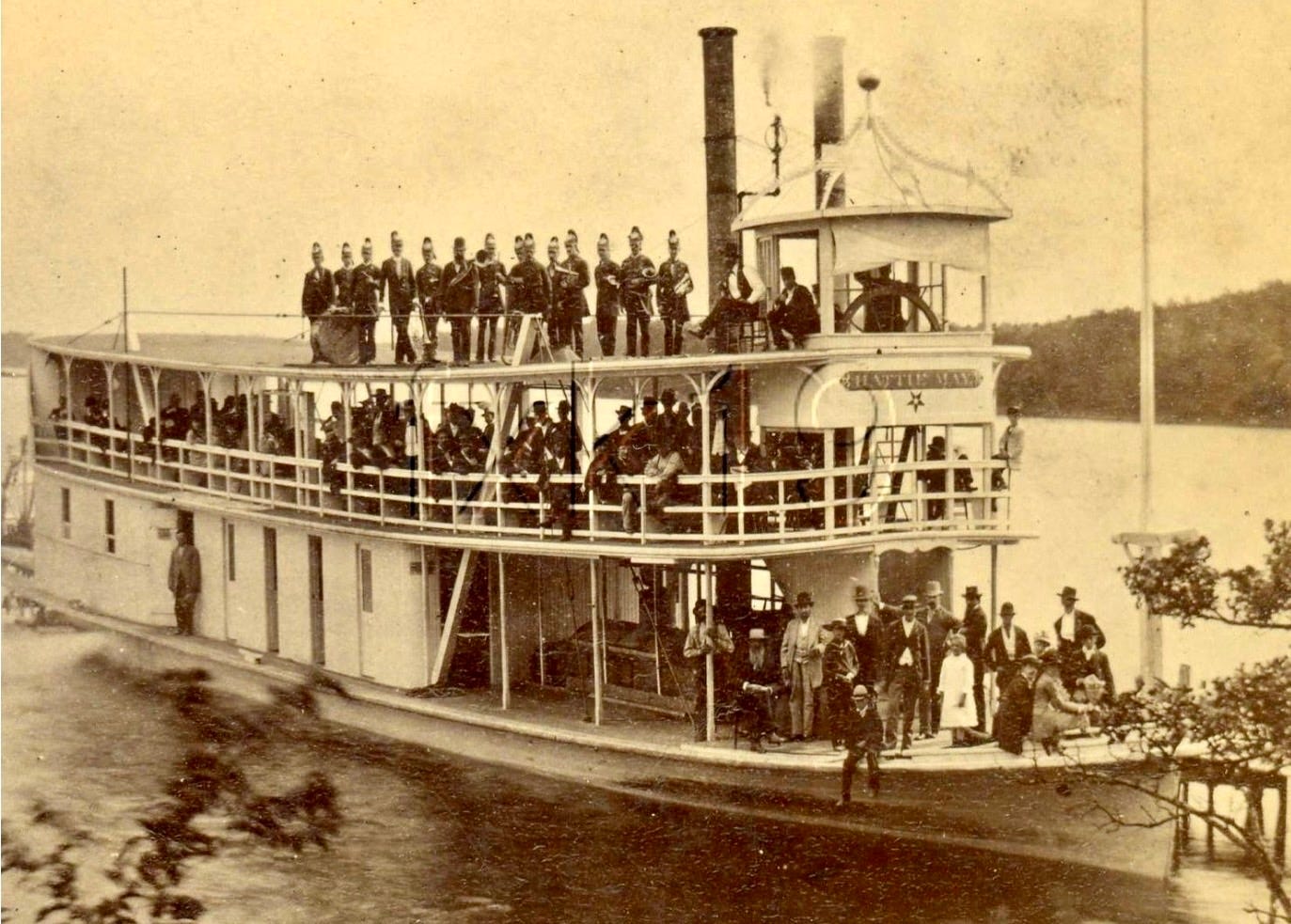
A small fleet of wooden steam vessels knit the lake’s twisting bays into a single connected world. Among these craft was the Hattie May, a sternwheeler whose history traces the rise of organized navigation on the lake and the shifting fortunes of its operators.
The Hattie May emerged during the formative years of the Lake Minnetonka Navigation Company, a period marked by experimentation, improv, and fierce competition. Built as a sternwheel steamer, she belonged to the generation of boats that predated the famous “streetcar boats” by nearly two decades. Her shallow draft and wide paddlewheel made her well-suited to Minnetonka’s tangled geography, especially the narrow, marshy constrictions separating Upper Lake from the smaller eastern bays. Steamboats of her size served as the indispensable connectors between the lake’s new pleasure resorts, private landings, and the ever-expanding railroad depots.
By 1881, company manifests list Hattie May among the fleet’s working vessels, running alongside steamers such as the Lotus and the City of Minneapolis. She was not a glamorous boat—nor the largest—but she was dependable, maneuverable, and well adapted to the booming traffic of the era.
The first phase of Hattie May’s career unfolded at a time when captains and railroad men routinely clashed over docking rights, passenger transfers, and control of the lake’s most lucrative landings. Steamship proprietors sought to position their fleets where resort guests disembarked from trains, while railroad companies attempted to monopolize access. Captains like those who operated Hattie May were often caught in the middle of economic rivalries that shaped—not always gently—the character of lake transportation.
A turning point arrived in September 1896, when veteran operator Captain John R. Johnson purchased a group of Lake Minnetonka Navigation Company vessels, including Hattie May. Johnson was a practical businessman and understood both the financial pressures of the industry and the evolving expectations of lake travelers. Under his ownership the steamer underwent a substantial rebuild, after which she re-entered service under a new name: the Tonka. The renaming signaled more than cosmetic change; it reflected a shift toward modernization and consolidation in the lake’s steam navigation industry. Boats were being rebuilt, lengthened, or repurposed as owners competed for the increasingly seasonal but still lucrative tourist trade.
Hattie May’s fate? There are claims (for example, in local lore or some secondary sources) that the Tonka (formerly Hattie May) burned at its dock around 1900, and that charred timbers remained visible for years afterward. This is not true.
She wasn’t scuttled in the lake either, historical records prove she was still sailing in the early 1900’s
Contemporary secondary sources (and a National Park Service / Minnesota MPDF) report that the Tonka (Hattie May) was burned as a spectacle on August 9, 1909.