Schmid Farm
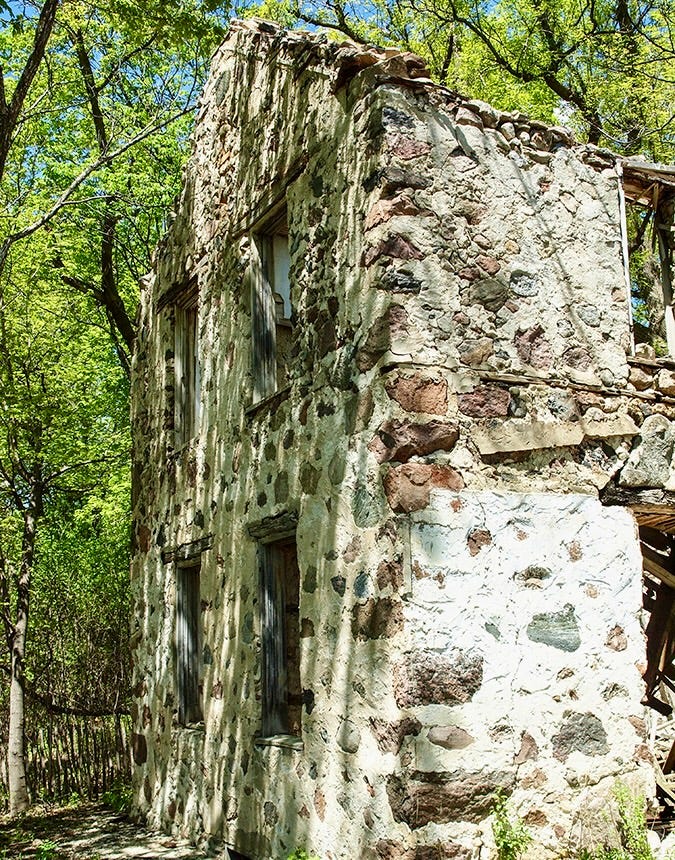
Joseph and his son Joseph Jr. built a robust fieldstone farmhouse

🏡 Origins and Growth
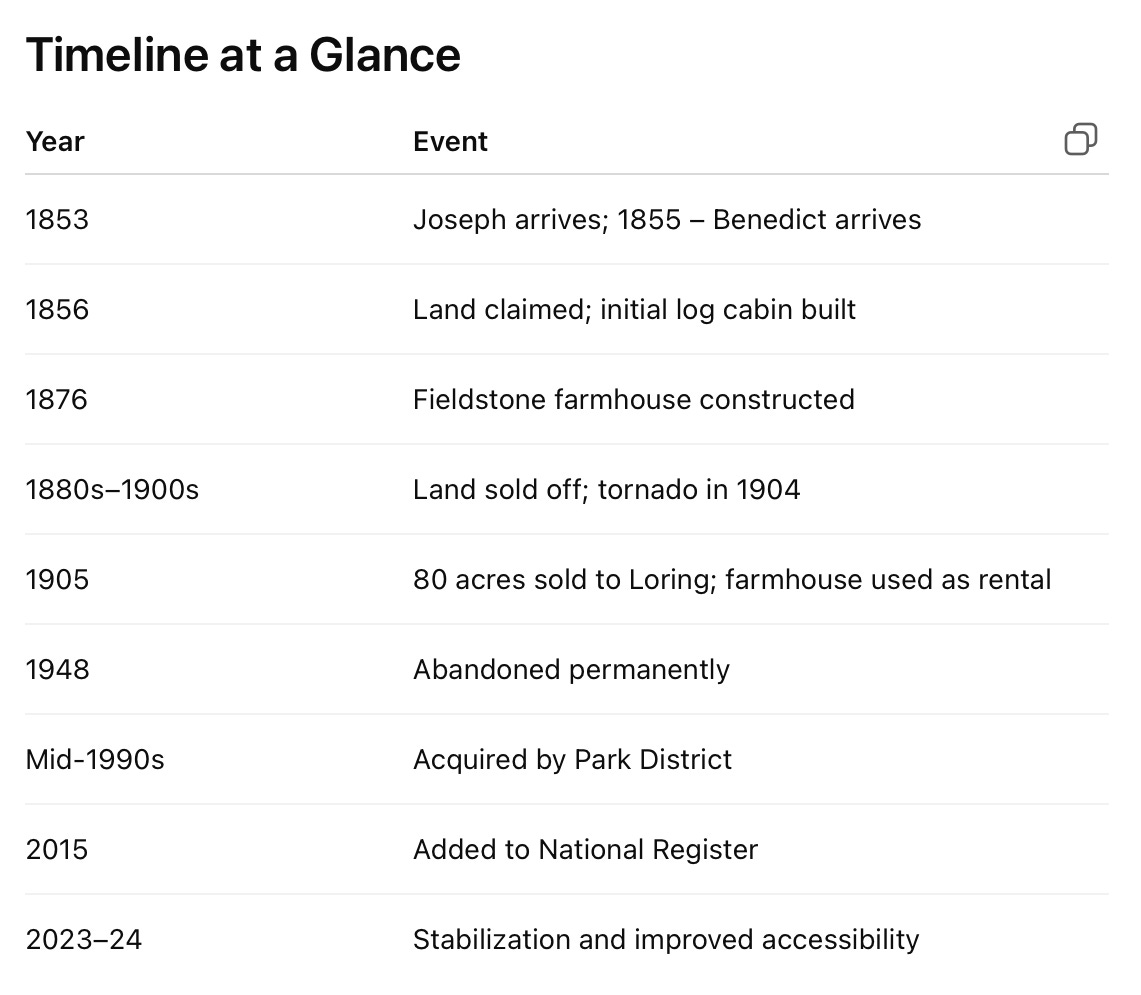
German immigrant roots: Brothers Joseph (b.1830) and Benedict Schmid (b.1833) arrived from Württemberg in the early 1850s. Benedict claimed 156.5 acres in July 1856, later selling it to Joseph by 1862.
From log cabin to stone farmhouse: The Schmid family initially lived in a log cabin. By 1874, Joseph had expanded to over 334 acres. In 1876, he and his son Joseph Jr. built a robust fieldstone farmhouse that symbolized permanence and prosperity.
Farm Life
Operation details: The farm raised livestock—cows, pigs, horses, sheep—and cultivated wheat, oats, potatoes, corn, hay, apples while producing butter and eggs (circa 1879: 496 bu wheat, 50 tons hay, 50 bu potatoes, 50 bu apples, 200 lb butter, 120 eggs).
Generational transition: Around the 1880s, Joseph Sr. began passing the farm to his son Joseph Jr. A tornado in 1904 destroyed the barn, but the stone house survived.
Decline, Sale & Ownership Changes
Land sales and rentals: Joseph Jr. sold parcels at the century's turn; the remaining 80 acres sold to Albert C. Loring in 1905, who added it to his dairy operations. The farmhouse wasn't modernized (no plumbing or electricity) but was rented out until 1948.
Abandonment and preservation: No longer occupied, the roof collapsed. The estate passed through professional wrestler Verne Gagne before being acquired by Three Rivers Park District in the mid–1990s.
Recognition & Restoration
Historic status: In 2015, the fieldstone farmhouse ruins were listed on the National Register of Historic Places, recognized for its ties to 19th-century German-American farming on Lake Minnetonka.
Stabilization efforts: A 2023–24 preservation project, funded in part by great-grandson Douglas Florian Schmid, installed metal framing, repointed stone walls, added interpretive signage, and improved access. Completion is slated for summer 2024.
Legacy & Community
Family reunions: Over 400 Schmid descendants gathered in 2018 near the farmhouse ruins, bonding over shared heritage and sparking continued interest in their ancestry.
Interpretive site: Today, the ruins stand in Lake Minnetonka Regional Park as a self-guided educational feature, bridging Minnetrista’s agricultural past and its natural beauty.
Visiting Today
The stable stone walls now provide a window into 19th-century farming life. With interpretive signage and safe walkways, it’s a rich, tangible glimpse into the immigrant experience, agricultural evolution, and regional heritage at Lake Minnetonka.