
Minnetonka Boat Works
The origins of the Minnetonka Boat Works can be traced to the late 1860s and 1870s

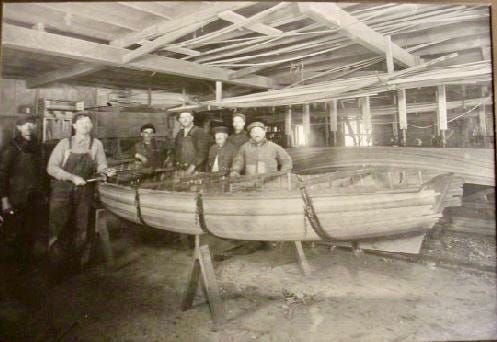
The Minnetonka Boat Works occupies a distinctive place in the industrial and cultural history of Lake Minnetonka. Though far less famous today than the grand hotels or excursion steamers that once defined the lake’s Gilded Age, the Boat Works served as one of the lake’s earliest centers of craftsmanship, innovation, and everyday utility. Emerging in the late nineteenth century—an era when Lake Minnetonka was transforming from frontier wilderness into one of the Midwest’s premier resort regions—the Minnetonka Boat Works both shaped and was shaped by the changing needs of the lake’s residents, visitors, and growing recreational community.
The origins of the Minnetonka Boat Works can be traced to the late 1860s and 1870s, when settlement around the lake increased and a thriving hospitality economy took root. Tourists from across the country flocked to the newly built hotels, and local landowners constructed summer homes that created demand for reliable water transportation. Small boat liveries—often little more than sheds and docks—sprang up to rent skiffs, rowboats, canoes, and simple pleasure craft. These early enterprises evolved naturally into basic boatbuilding shops, and among them, the Minnetonka Boat Works distinguished itself by pairing craftsmanship with an ability to respond to the lake’s growing appetite for recreational boating.
By the 1880s and 1890s, the Minnetonka Boat Works had become a recognized builder of quality wooden watercraft. Traditional cedar-planked rowboats remained a staple, but the company also supplied sailboats to the increasingly active Minnetonka Yacht Club, founded in 1879. The lake’s unique geography—long, narrow bays punctuated by broader open water—made it ideal for fast, flat-bottomed racing scows, a design that would eventually put Lake Minnetonka on the national sailing map. The Boat Works constructed, repaired, and customized many of these early scows, contributing to a racing culture whose legacy endures into the twenty-first century.
At the turn of the century, new technologies began reshaping American boating, and Minnetonka Boat Works adapted accordingly. The internal combustion engine allowed the company to expand into gasoline-powered launches and runabouts, which quickly became popular among both year-round residents and seasonal visitors. These vessels were more than recreational toys; they formed part of a transportation network that connected railway depots to lake homes in an era before widespread automobile ownership and paved roads. “Commuter launches,” as they were known, reflected the changing patterns of settlement around the lake and the increasing desire for speed, convenience, and personal mobility.
The early decades of the twentieth century represented the Boat Works’ final major period of influence. As Lake Minnetonka’s once-celebrated resorts faded, and as national boat manufacturers began producing inexpensive standardized hulls, local builders found it increasingly difficult to compete. New materials—most notably steel and later fiberglass—also undermined the handcrafted wooden-boat tradition that had defined the Minnetonka Boat Works. By the mid-twentieth century the company had quietly disappeared, leaving behind only scattered records, a few surviving vessels, and memories held in local archives and private collections.
Yet the Minnetonka Boat Works’ significance cannot be measured solely by its longevity. It contributed directly to the character of Lake Minnetonka during its most formative years. It supported a culture of exploration, leisure, transportation, and sport, enabling thousands of residents and visitors to engage with the water that defined the region. It played a supporting but essential role in the development of scow sailing, one of the lake’s most enduring legacies. And it exemplified the entrepreneurial and artisanal spirit of the lake’s early communities, who saw opportunity not just in the beauty of the shoreline but in the practical necessity of moving across water.
Today, with only remnants of its production surviving, the Minnetonka Boat Works stands as a symbol of a bygone era—one in which wooden hulls, hand tools, and the rhythms of lake life shaped the economy and identity of the region. Its history offers a window into the evolution of American boating, the rise and fall of a resort empire, and the enduring relationship between a community and the water that surrounds it. In remembering the Minnetonka Boat Works, we also remember the lake’s early spirit of innovation and the craftsmanship that helped make Lake Minnetonka one of Minnesota’s most storied and beloved places.
This post written by AI and human fact checked for accuracy.