
Harrison Bay
The bay takes its name from Nathaniel Harrison, a carpenter and shipbuilder who arrived in the area in 1855

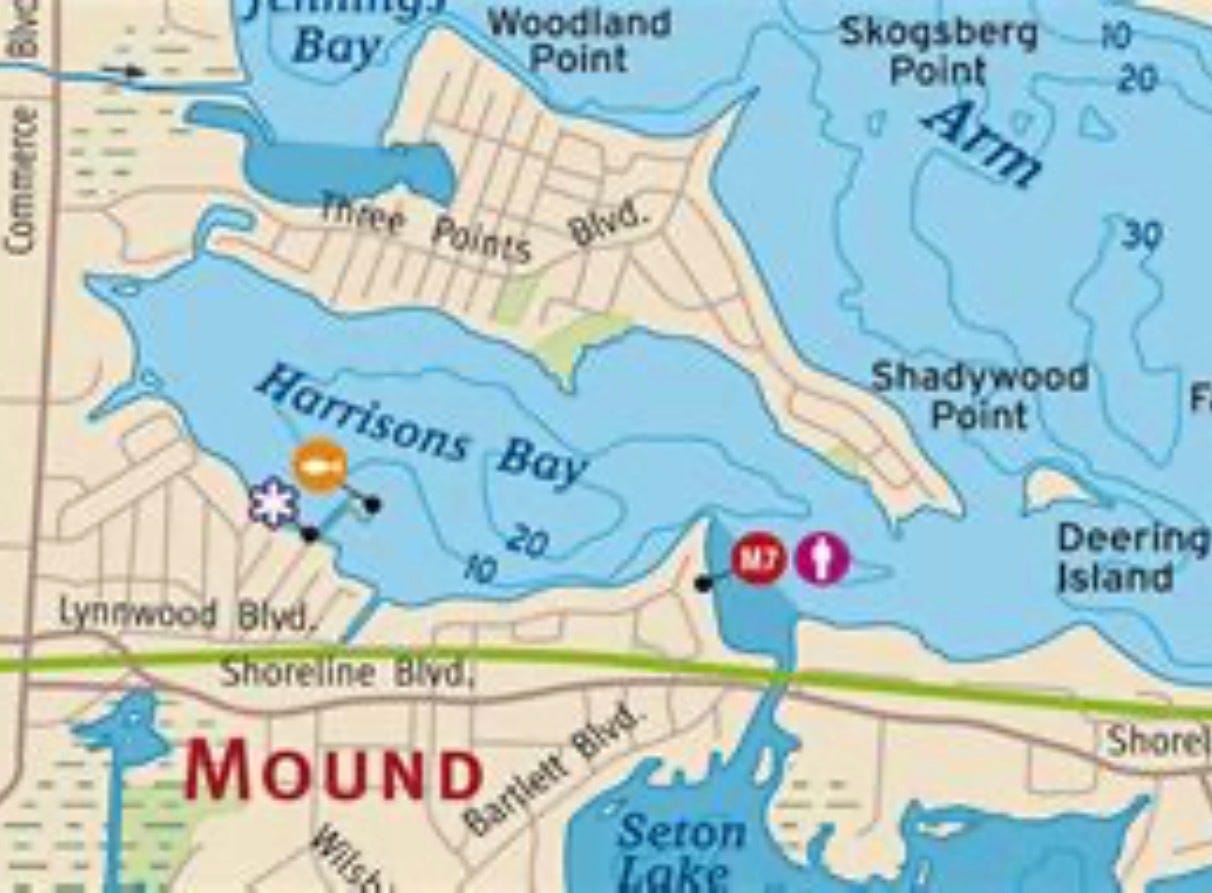
Harrison Bay, on the northwestern edge of Lake Minnetonka near the city of Mound is a small but historically rich corner of one of the state’s most storied lakes. Though today it is a peaceful residential area lined with docks and lakeside homes, its history reflects the larger transformation of Lake Minnetonka itself—from Native homeland to pioneer settlement, from shipbuilding hub to resort haven, and finally to modern suburbia.
The bay takes its name from Nathaniel Harrison, a carpenter and shipbuilder who arrived in the area in 1855, just as white settlement around Lake Minnetonka was beginning. Before that time, the lake and its shores were home to the Dakota (Sioux) indians, who used the region for hunting, fishing, and spiritual practices for generations. Harrison was one of the first European settlers to homestead along this part of the lake, establishing a small farm and boatworks along its shoreline.
Harrison’s work as a craftsman helped shape the early maritime economy of Lake Minnetonka. He is believed to have helped build or repair several of the early wooden vessels that once crisscrossed the lake—among them the Mary and May Queen, two steamers that became part of the lake’s growing network of excursion and transport boats. As a result, the bay became associated not only with his name but with the early industry of boatbuilding that helped open the lake to recreation and commerce.
By the 1870s and 1880s, Lake Minnetonka had become one of the premier vacation destinations in the Upper Midwest. Steamboats ferried tourists from one grand lakeside hotel to another, connecting resorts like the Hotel Lafayette in Minnetonka Beach with smaller communities scattered around the lake’s many bays. Harrison Bay, with its sheltered waters and proximity to Mound, played a supporting role in this vibrant steamboat era.
Though it never hosted a major resort, its protected shoreline made it an ideal location for small docks, repair sheds, and lakeside cottages. Steamboats often passed nearby en route to Seton Lake or the West Arm, where hotels and picnic grounds welcomed visitors. The Harrison family and others who settled in the area helped sustain this bustling activity through boat construction and maintenance.
Harrison Bay covers roughly 215 acres, and connects to the West Arm and Seton Lake through a narrow channel. The bay’s three and a half miles of shoreline are largely calm and shallow compared to the lake’s larger open waters. Historically, this made it ideal for fishing and small craft but less suitable for large-scale resort development—one reason it remained quieter and more residential over time.
The 20th century brought steady transformation to Harrison Bay. The rustic cabins and boathouses that dotted the shore in the early decades gave way to year-round homes as transportation improved and Mound evolved into a commuter suburb of Minneapolis. By midcentury, the bay had fully transitioned from its working and seasonal origins to a primarily residential community.
Today, Harrison Bay retains its charm as a quieter, more secluded corner of Lake Minnetonka. While it lacks the commercial bustle of Excelsior or Wayzata, it offers a glimpse into the lake’s past—where pioneers like Nathaniel Harrison once built boats by hand, and where generations since have sought both livelihood and leisure along the same tranquil shoreline.
The water still reflects the same sky Nathaniel Harrison once saw, but its shores tell a new story—one of endurance, adaptation, and the enduring pull of life on the lake.
I checked the post with It's AI detector and it shows that it's 87% generated!