
Halstead Heights
The area takes its name from Frank W. Halsted, one of the first Euro-American settlers along Lake Minnetonka

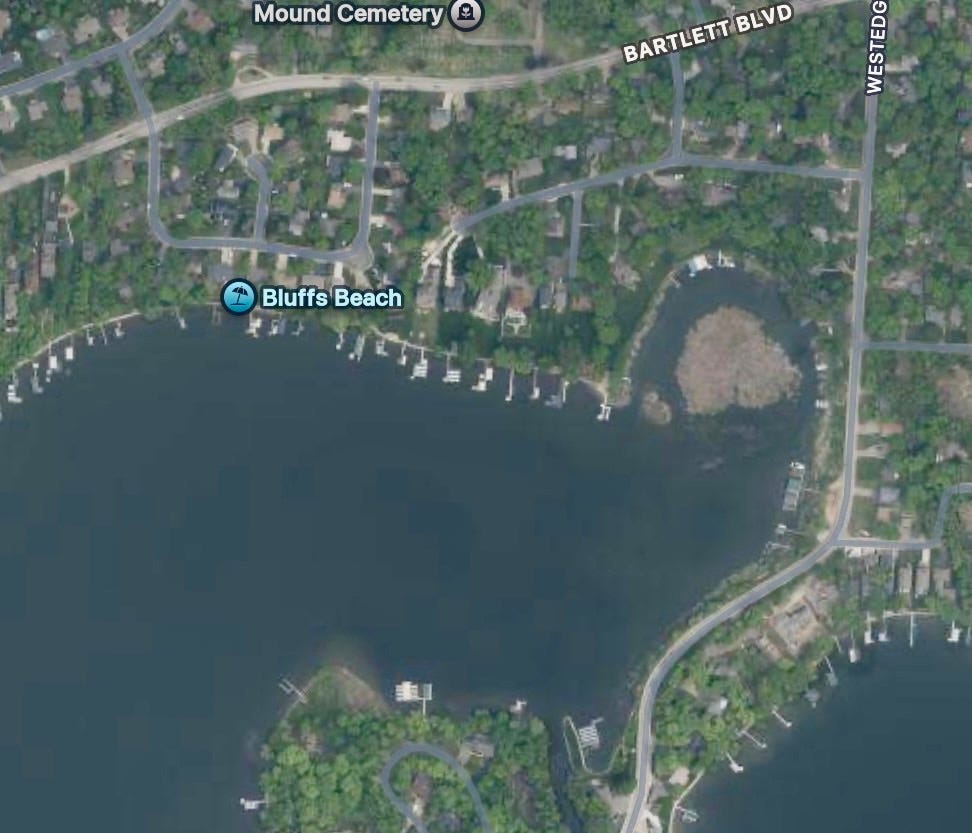
The neighborhood known today as Halstead Heights lies within the city of Mound. Its history reflects both the settlement of the lake region in the mid-19th century and the later suburban expansion of the mid-20th century.
The area takes its name from Frank W. Halsted, one of the first Euro-American settlers along Lake Minnetonka. Halsted arrived in 1855 and established himself near the bay that became known as Halsted’s Bay. Like other settlers of the period, he farmed the land and contributed to the growing communities that would eventually surround the lake. Halsted’s name, attached to the bay, carried forward into neighborhood naming generations later.
The city of Mound was formally incorporated in 1912, but it remained a modest lakeside community for decades. The mid-20th century brought steady suburban growth as Minneapolis–St. Paul expanded outward, and demand for residential housing around the lake increased.
In 1960, Mound annexed several neighboring areas to accommodate this growth. Halstead Heights, along with Island Park, was officially incorporated into Mound at this time. Prior to annexation, the land had already begun to be subdivided into residential lots, but municipal annexation brought zoning oversight, infrastructure expansion, and integration into city services.
Following annexation, Halstead Heights developed primarily as a residential subdivision. Houses were built in phases from the 1960s onward, with additional homes constructed in the 1970s, 1980s, and 1990s. Property records show a mix of mid-century split-levels and ramblers, later joined by larger contemporary homes. Infill construction and remodeling have continued into the present, reflecting ongoing investment in the neighborhood.
Halstead Heights is characteristic of Mound’s suburban development during the postwar era: family-oriented neighborhoods built within reach of Minneapolis but retaining proximity to the lake’s natural amenities. The neighborhood’s integration into Mound tied it into the Westonka school system, local civic institutions, and the broader development trajectory of the city.